

What Coachella Reveals About Modern Brand Building
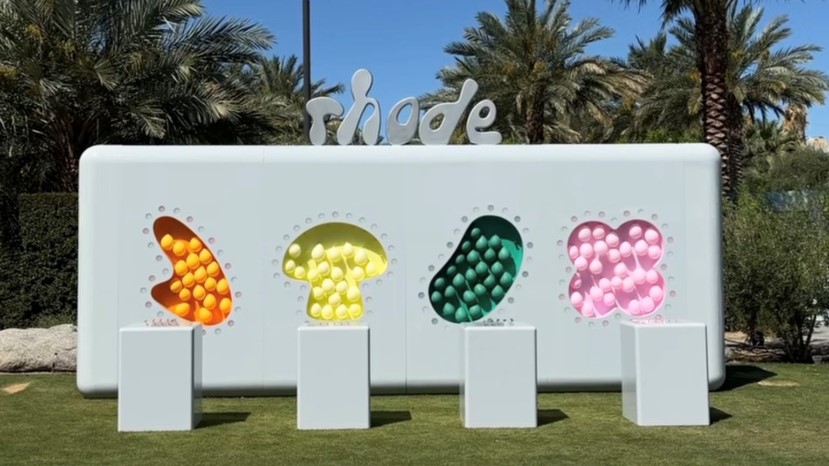 Photo: @rhode via Instagram
Coachella has long been more than a music festival. Today, it’s one of the most watched cultural moments in the world.
Drawing more than 125,000 people per day, it brings together artists, fans, creators and brands in a way few other events can. But increasingly, the real audience isn’t just on the ground in Palm Springs. It’s global.
For marketers, Coachella has become a live testing ground for how physical experiences translate into digital impact, and ultimately, commercial return.
IRL at scale
What makes Coachella unique is not just its size, but its role in culture.
Music, fashion and brand storytelling don’t sit separately here, they overlap. A performance becomes a fashion moment. A pop-up becomes content. A product launch becomes part of a wider narrative.
And the scale is significant.
Early data from Launchmetrics suggests that weekend one of Coachella 2026 generated around $870 million in media impact value, a metric used to estimate the value of brand visibility across social, online and media.
To put that into context, the entire festival across both weekends in 2025 generated $908 million. In other words, within just a few days, Coachella had already almost matched the previous year’s total.
That level of visibility is what makes it such a powerful moment for brands, but also what makes it increasingly competitive.
What’s notable is that this approach is no longer limited to luxury or fashion. Brands across categories are now designing activations with content in mind. For example, Medicube focused on product-led, creator-friendly experiences creating “get ready” spaces where products were seamlessly integrated for attendees to use and share. Poppi took a more lifestyle-driven approach, embedding itself into the wider festival environment through bright, highly shareable moments.
What links these approaches is not budget or category, but intent. Each brand is building experiences designed to travel beyond the physical space, with social content, creator participation and audience interaction built in from the outset.
Case Study: Rhode and the power of timing
One of the standout examples from 2026 came from Rhode.
Its presence started before festival gates had even opened. Billboards lined the road into Indio, building anticipation as attendees made their way to the site. By the time “Rhode World” opened, influencers were already queuing in the heat hours in advance, documenting the journey as part of the experience itself.
Without being an official festival sponsor, the brand generated around $10 million in media value through its activation. Influencer activity alone contributed approximately $3.3 million, helping to drive over 68 million engagements and more than 740 million impressions across social platforms in just one week.
Rhode also captured over 30% share of voice within beauty conversations across the weekend, outperforming competitors by a significant margin and reportedly achieving engagement levels more than three times higher than its nearest rival. For a brand without official sponsorship, that level of impact is significant.
What made this particularly effective was timing.
Rather than treating each activity as a standalone moment, Rhode compressed multiple touchpoints into a single, high-impact window. The activation launched alongside Justin Bieber’s headline performance, followed closely by the release of the Rhode x The Biebers collection.
Each element fed into the next, creating sustained momentum rather than a single spike in attention.
For marketers, it’s a reminder that timing is not just a logistical decision. It is a strategic one.
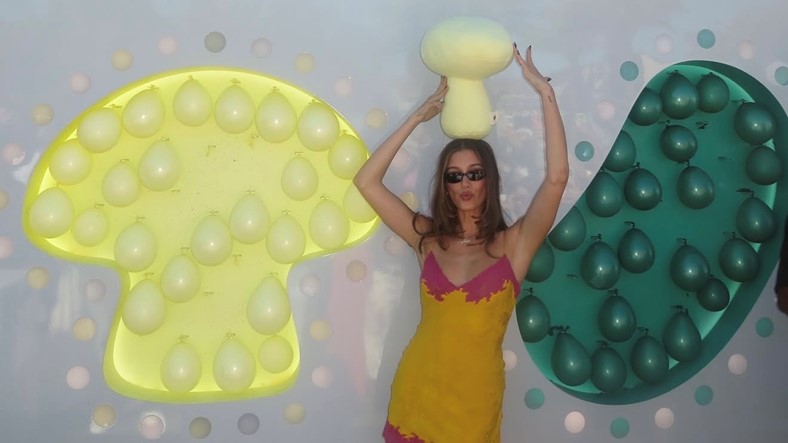 Photo: @rhode via Instagram
When brand and culture work together
Coachella also highlights a shift in how partnerships are working.
The most successful collaborations are no longer about visibility alone. They are about integration.
Take SKYLRK, the streetwear label co-founded by Justin Bieber. Its presence at the festival extended beyond a simple pop-up. A large-scale activation space, a limited-edition capsule collection and Bieber’s headline performance all worked together as one continuous story.
The result was strong commercial and cultural impact, with the collection selling out within hours and generating significant social traction.
Similarly, Dior approached Coachella through multiple cultural touchpoints rather than a single moment.
Four distinct custom Dior looks worn by Sabrina Carpenter during her headline set generated millions in media value. Additional placements across the weekend, including Hailey Bieber’s 1998 Dior slip dress at the Rhode World pop-up, further boosted the brand’s visibility and reinforced its position within the wider cultural moment.
The takeaway is clear. Cultural fit matters more than a single big placement. Brands that show up in ways that feel natural to the moment see stronger and more sustained impact.
Influence is now a form of media production
Influencers have long been part of Coachella, but their role has evolved.
They are no longer simply amplifying brand messages. They are producing the content that drives them.
Moments like “Bieberchella” generated widespread online conversation, fuelled by a mix of creators, celebrities and media all engaging with the same cultural moment in real time.
For brands, this reinforces a key shift. Influence is no longer just about reach. It is about participation in storytelling.
The most effective campaigns are those where creators are considered from the outset, not added in at the end.
From experiential marketing to measurable results
One of the biggest changes in recent years is how these moments are evaluated.
Metrics like media impact value help quantify what was once difficult to track, from social engagement to media coverage. But more importantly, they allow brands to compare performance across campaigns and understand what’s actually driving results.
This reframes experiential marketing.
Rather than being seen as difficult to measure, IRL activity is increasingly one of the most effective ways to fuel digital performance.
A well-executed activation can:
- Generate immediate earned media value
- Drive real-time engagement at scale
- Increase search and product demand
- Support direct paths to purchase through social
What marketers can take from Coachella
While few brands will operate at this scale, the principles are highly transferable.
Timing is a strategy
Bringing together multiple moments into one cultural window can create compounding impact.
Design for content, not just attendance
The most valuable audience is often the one watching online.
Prioritise cultural fit
Relevance will outperform reach when it comes to sustained visibility.
Build with creators in mind
Content should feel natural to the platforms where it will live.
A shift towards more human marketing
Coachella may represent the extreme end of experiential marketing, but it reflects a broader shift.
As digital channels become more saturated, brands are rediscovering the value of real-world connection. Not as a replacement for digital, but as the engine that drives it.
For marketers, the opportunity is clear. The question is no longer whether to invest in IRL experiences, but how to make them work harder.
Because when done well, what happens in the real world doesn’t stay there. It scales.
Sources: Data and insights referenced from Launchmetrics Coachella 2026 analysis.