

Here's what happened, what I took away, and what I think it means for anyone working in marketing right now.
Tuesday 8 July: The Debate - Portcullis House, Westminster
I was invited by the CIM to a debate at Portcullis House, chaired by Christine Jardine MP, on a motion that's been sitting uncomfortably in the back of every marketer's mind:
"By 2030, advances in AI will render half today's marketing workforce unnecessary, forcing a redefinition of marketing."
I went in on one side. I left on the other.
Not because the arguments for the motion were more compelling - but because of the term Wiped out.
That's not what's happening. The workforce isn't disappearing, it's changing.
Speakers on both sides made strong cases. Jay Trestain from IBM Consulting and Duarte Garrido from DoJo AI argued for the motion. Sandrine Desbarbieux-Lloyd, Global CMO at Jabra and Duncan Smith, CIM Course Director, argued against it. All four were worth listening to.
But what stayed with me was this: if you're a marketer whose job is primarily execution - managing manual tasks, inputting data, running the same campaign template - that role is at risk. Not because marketing is dying. Because it can be automated. And companies aren't redesigning what 'junior marketer' means fast enough.
The people who reskill and move up the value chain will be fine. The people who don't will find their roles quietly absorbed by the tools.
Marketing is still about the customer. That definition holds. What's shifting is how we spend our time - less execution, more strategy. Less doing, more deciding what's worth doing.
AI can run the campaign. It can't decide why the campaign matters. We don't need less of us. We need a different version of us.
Wednesday: The 18th CIM Digital Marketing Conference - IWM Duxford
This was my first time at the Digital Marketing Conference and what a venue to experience it in for the first time. The Imperial War Museum at Duxford is extraordinary, and it gave the whole day a real sense of occasion.
It was also brilliant to finally meet CIM CEO Chris Daly in person. The day was packed with insight, but a few moments stood out in particular.
Here's how the day unfolded.
The state of digital advertising
Tristan Silva from the IAB opened with a compelling look at where digital advertising is right now - and where it's heading. Ad spend is shifting significantly, with projections putting it at £49 billion by 2027. The numbers tell a story about where attention is going and what marketers need to plan for. A strong, grounding start to the day.
Me Marketing - the power of emotion
Abdul Zahid from Anglia Ruskin University made the case for what he called Me Marketing - the idea that appealing to people as individuals, using emotion rather than just logic, is what actually moves them. It reinforced something I believe deeply: people make decisions emotionally and justify them rationally. If your marketing isn't connecting at a human level, it's working harder than it needs to.
Email as community, not just communication
Margaret Ward from CC'd Consultancy delivered something genuinely rare - not just theory, but actual methodology. Her reframe around email was the thing that stayed with me most. Not email marketing in the traditional sense - discount codes, promotions, the stuff that fills up inboxes. Email as a community-building tool. Creating something people actually want to be part of, rather than something they tolerate until they unsubscribe. That shift in thinking alone was worth the day.
Getting the most from LinkedIn
Luke Brynley-Jones from OST walked us through how to get the best from both LinkedIn pages and profiles - practical, specific and immediately usable. LinkedIn remains one of the most powerful platforms for B2B marketing when it's used with intention, and this session gave plenty to take away.
Personal branding
Jo Bird reminded the room why personal branding matters - and why it's not optional anymore. Expect LinkedIn to be busier than usual over the next few weeks as everyone puts it into practice. This post included.
Marketing in the future
James opened with a look at what marketing teams will look like in the future - and the stat that landed hardest was this: 65% of job skill requirements will change by 2030. Not disappear. Change. He closed with a quote from Sandrine Desbarbieux-Lloyd from the debate the day before that I haven't stopped thinking about: “AI will not diminish the value of marketing - it will expose it.”
AI in action - the breakout sessions
Duncan Bird and Mat Parkins from The AI Guys ran two separate breakout sessions simultaneously, which meant choosing between them. Duncan covered AI-powered competitor analysis for B2B - genuinely useful, practical and grounded in real application. Mat's session tackled hyper-personalised marketing using AI for B2C. Both sessions cut through the noise around AI and showed what it actually looks like when it's implemented well.
The campaign that broke all the rules
Ben Wood from Hallam and Dan Roche from Workbooks closed the main sessions with something I wasn't expecting - a bold campaign that deliberately broke the accepted rules of CRM marketing. The result? A significant amount of new business and a collection of awards. It was a brilliant reminder that creativity and commercial impact aren't in tension. Done properly, they're the same thing.
Closing remarks from Chris Daly, CEO of the CIM left us all feeling optimistic about an ever changing landscape.
What I'm taking away from this week
Two events. Two very different formats. But one consistent thread running through both of them.
People.
Understanding them. Communicating with them. Putting them at the centre of every strategy, every campaign, every decision. AI isn't changing that. If anything, it's making it more important.
The marketers who will thrive in the next five years won't be the ones who use AI the most. They'll be the ones who combine it with the deepest possible understanding of the people they're trying to reach.
That's always been the job. It always will be.
About the Author - Reena Patel

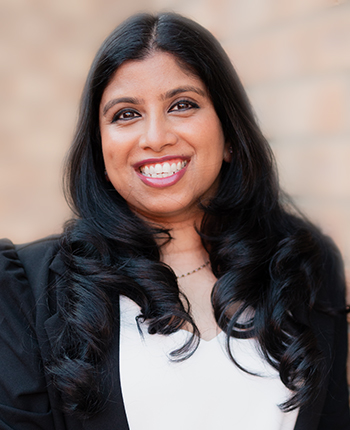
Reena is the Founder of You and Your Story, a marketing consultancy focused on helping businesses build strong brands.
With over 20 years of experience across multiple industries she has developed a strong understanding of different audiences, commercial environments and the importance of aligning marketing with wider business objectives. She is also the host of the Marketing Ninja Unleashed podcast designed to make marketing more accessible and effective for business owners and marketers alike.
Reena is Vice Chair, Communications for CIM Midlands